Ayni
See the glucose of someone who shares it with you
Version: 0.1.7
Added: 22-10-2026
Updated: 22-10-2026
Added: 22-10-2026
Updated: 22-10-2026
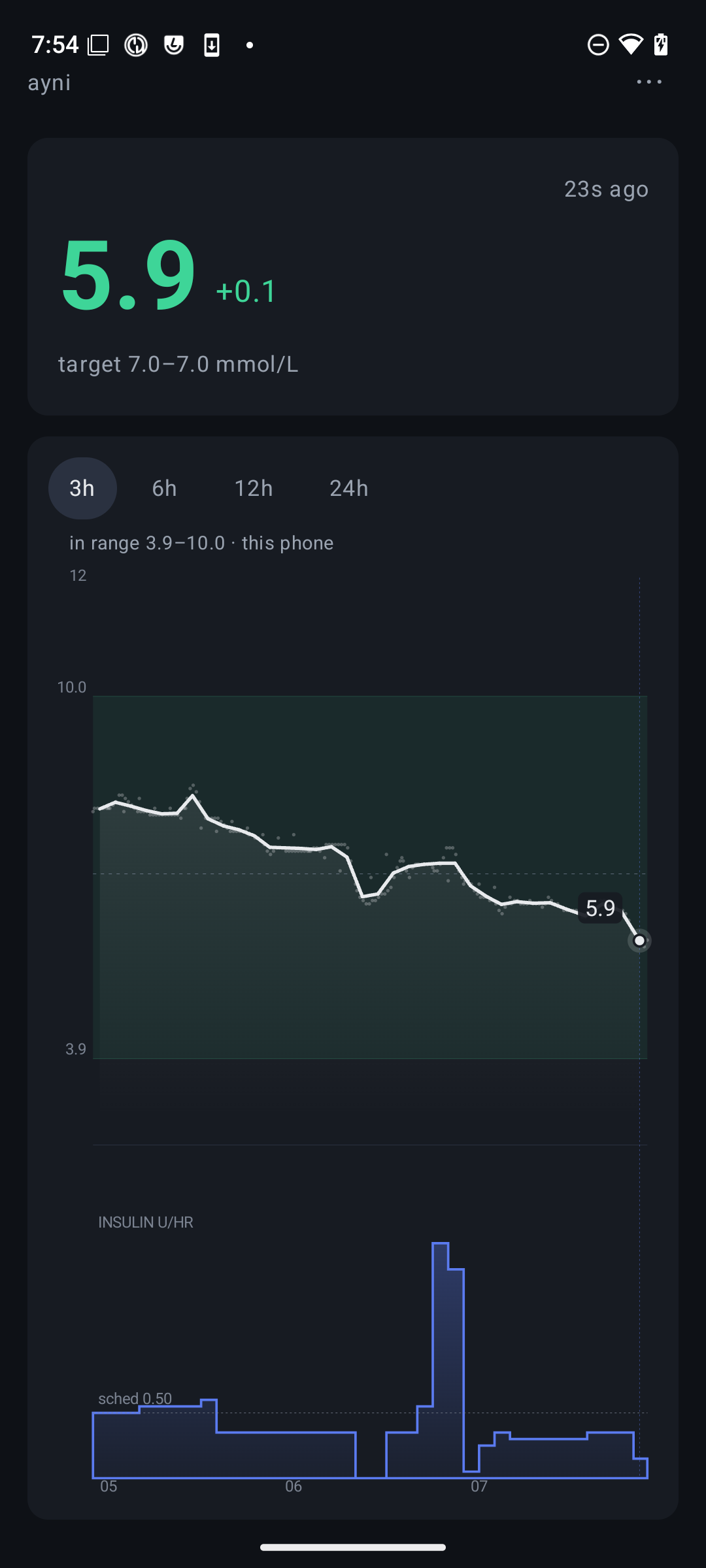
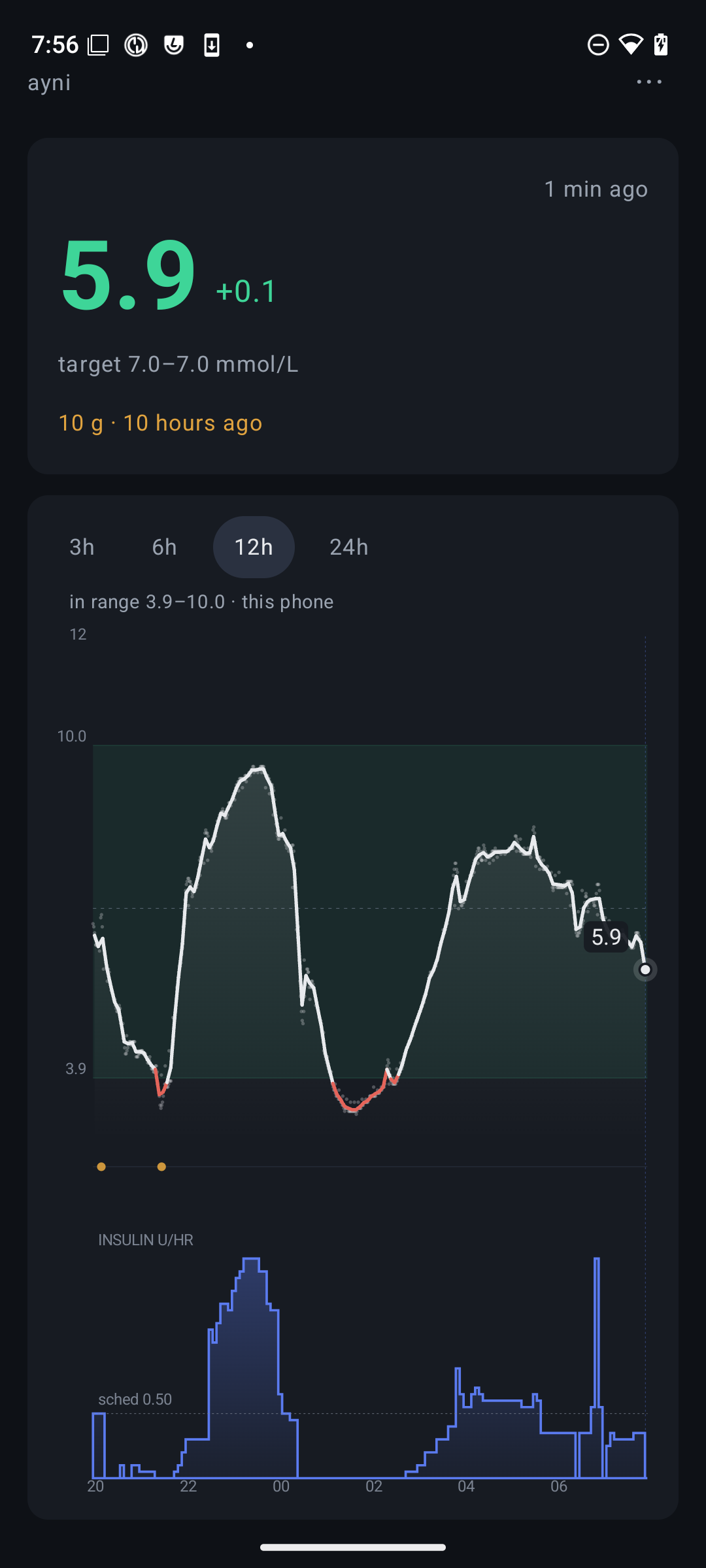
Shows the glucose of somebody who has chosen to share it with you.
Ayni is a Quechua word for reciprocity — help given and returned over time.
It is the shape of the network underneath: your phone carries other people's
sealed records so that theirs carry yours when your phone is off or away,
and no phone can read what it holds for anyone else.
It is a viewer and nothing else. It cannot deliver insulin, it contains no
closed-loop code, and it does not talk to a pump. If you are looking for an
artificial pancreas, this is not it and does not include one.
Readings travel directly between phones. There is no account, no server
holding your data, and nobody in the middle who can read it: records are
sealed on the sender's phone before they are sent, and only somebody they
have granted a key to can open them. Sharing is withdrawn by stopping the
key, not by asking a service to stop serving.
Pairing is one scan. The person sharing scans the follower's code; their
phone grants access and hands back its own address in the same movement.
Every reading is shown with its age. A follower's dangerous failure is not
an error on screen — it is a number that looks current and is nine hours
old.
To share your own data you need the AndroidAPS add-on from the project's
repository, which you build yourself. It is deliberately not distributed.
A relay is used to introduce two phones that are on different networks. It
carries encrypted traffic it cannot read and holds nothing, but it does see
which node identifiers exchange bytes and when. The relay is chosen by the
person sharing and travels in their invite, so it can be one they run.
Ayni is a Quechua word for reciprocity — help given and returned over time.
It is the shape of the network underneath: your phone carries other people's
sealed records so that theirs carry yours when your phone is off or away,
and no phone can read what it holds for anyone else.
It is a viewer and nothing else. It cannot deliver insulin, it contains no
closed-loop code, and it does not talk to a pump. If you are looking for an
artificial pancreas, this is not it and does not include one.
Readings travel directly between phones. There is no account, no server
holding your data, and nobody in the middle who can read it: records are
sealed on the sender's phone before they are sent, and only somebody they
have granted a key to can open them. Sharing is withdrawn by stopping the
key, not by asking a service to stop serving.
Pairing is one scan. The person sharing scans the follower's code; their
phone grants access and hands back its own address in the same movement.
Every reading is shown with its age. A follower's dangerous failure is not
an error on screen — it is a number that looks current and is nine hours
old.
To share your own data you need the AndroidAPS add-on from the project's
repository, which you build yourself. It is deliberately not distributed.
A relay is used to introduce two phones that are on different networks. It
carries encrypted traffic it cannot read and holds nothing, but it does see
which node identifiers exchange bytes and when. The relay is chosen by the
person sharing and travels in their invite, so it can be one they run.