Lens HRV
Measure heart-rate variability with your phone camera, no extra sensors
Version: 1.0.2
Added: 12-09-2026
Updated: 01-10-2026
Added: 12-09-2026
Updated: 01-10-2026
Lens HRV is an Android app that measures heart-rate variability — how much the time between your heartbeats changes from one beat to the next, measured in milliseconds. It uses Photoplethysmography (PPG), a simple optical technique that detects tiny changes in blood flow through your fingertip using only your phone’s camera and flash. Completely non-invasive and requires no extra sensors.
Why HRV matters
Heart-rate variability is more than just a heart measurement. The small changes between your heartbeats come from many processes happening in the body at the same time. Your heart does not work alone. It is constantly interacting with the rest of the body — the nervous system, the lungs, hormones, temperature, the immune system, digestion, circadian cycles, emotions and more. HRV works like a microscope that lets us observe that interconnected network.
What makes Lens HRV different
Most HRV apps today work like closed boxes. They are usually paid, require expensive extra sensors, and only show you the final numbers they decide to calculate. You rarely get access to the raw signal. Many of them also oversimplify the body’s state into a single score or color.
Lens HRV is completely open source. Every algorithm it uses comes from publicly available, peer-reviewed research. The focus is on classic digital signal processing instead of heavy artificial intelligence. This keeps the app lightweight, understandable, and able to run on a wide range of devices.
All data is processed directly on your phone — nothing is sent to the cloud. You keep full privacy and full control.
The app does not offer “readiness” scores. That kind of metric is considered too complex and often oversimplified. Instead, Lens HRV focuses on clear and simple measurements. The goal is a frictionless tool that is accessible to everyone.
How it works
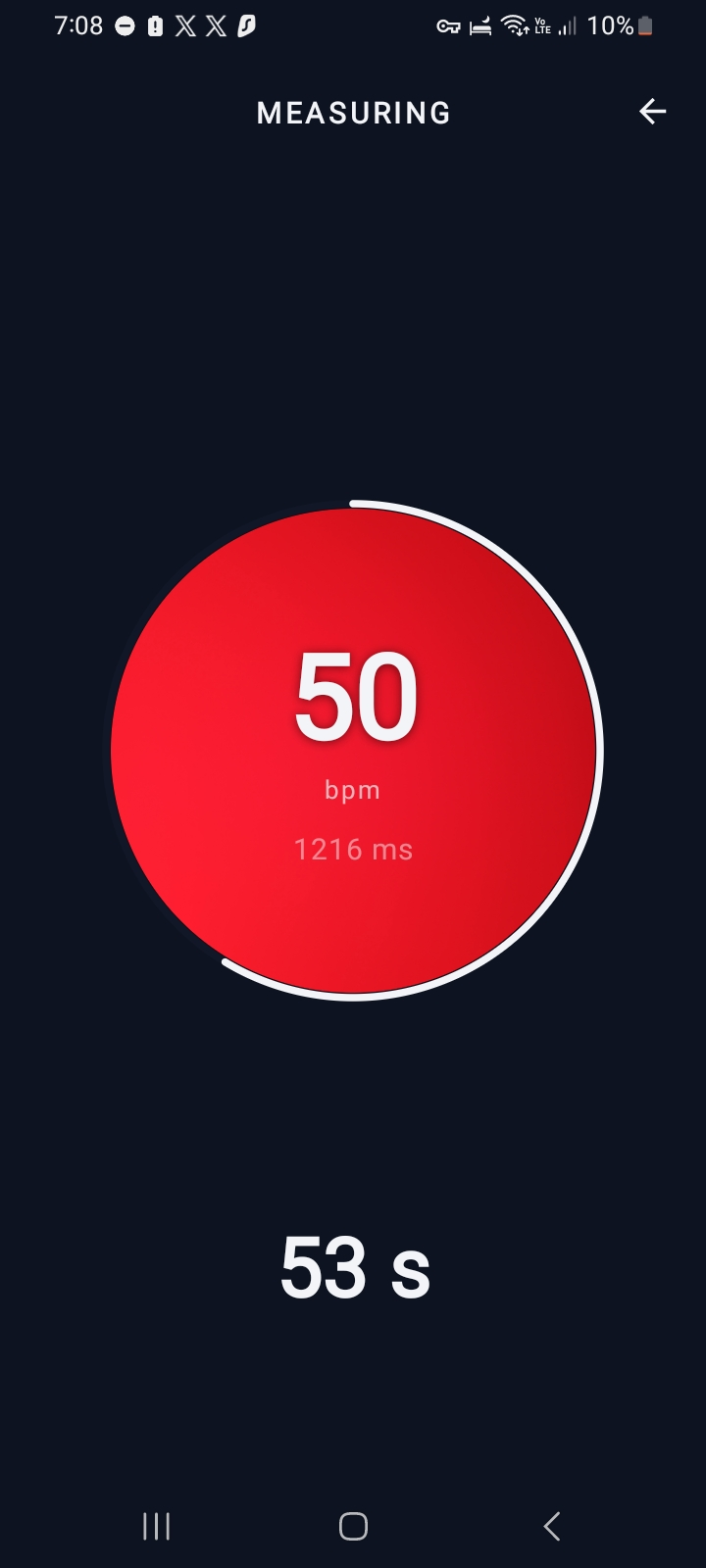
Place your index finger over the camera lens until the preview turns a deep red. A short calibration starts the recording. Keep the finger still. When it ends, the full signal is processed offline. The preset is meant for normal indoor conditions.
What you get
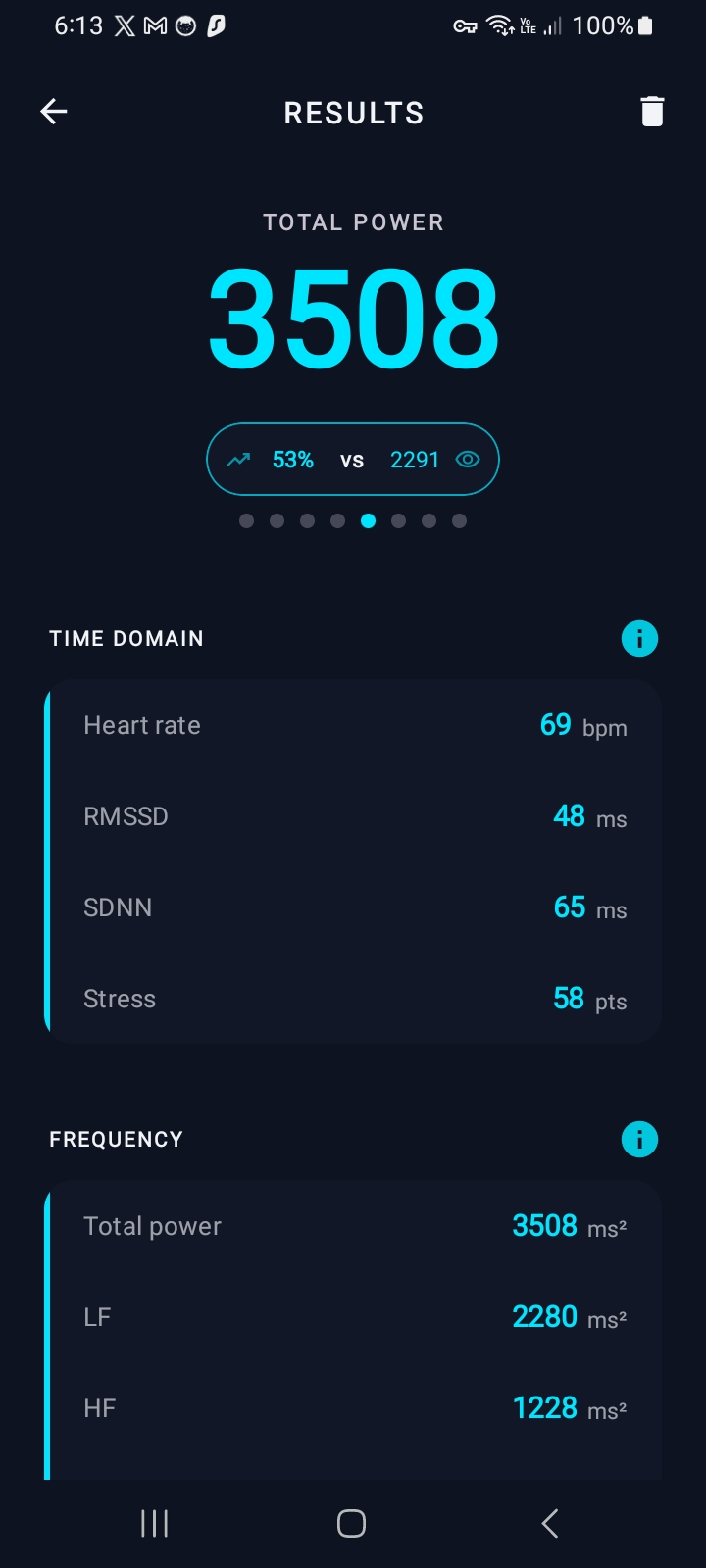
Time domain: Heart Rate, RMSSD, SDNN and Stress Index.
Frequency domain: Total Power, LF, HF, LF/HF, LF Peak, respiration rate and Coherence Score.
Each session also shows artifacts and coverage. Below 5% is excellent, below 15% is good, and 15% or more is invalidated.
Each session is compared with a 7-day baseline. Settings can export your data as CSV.
Disclaimer
Lens HRV is a technical tool for personal data tracking and analysis. It is not a medical device and does not provide medical advice, diagnosis, or treatment. Always consult a qualified healthcare professional for any health-related decisions.
Why HRV matters
Heart-rate variability is more than just a heart measurement. The small changes between your heartbeats come from many processes happening in the body at the same time. Your heart does not work alone. It is constantly interacting with the rest of the body — the nervous system, the lungs, hormones, temperature, the immune system, digestion, circadian cycles, emotions and more. HRV works like a microscope that lets us observe that interconnected network.
What makes Lens HRV different
Most HRV apps today work like closed boxes. They are usually paid, require expensive extra sensors, and only show you the final numbers they decide to calculate. You rarely get access to the raw signal. Many of them also oversimplify the body’s state into a single score or color.
Lens HRV is completely open source. Every algorithm it uses comes from publicly available, peer-reviewed research. The focus is on classic digital signal processing instead of heavy artificial intelligence. This keeps the app lightweight, understandable, and able to run on a wide range of devices.
All data is processed directly on your phone — nothing is sent to the cloud. You keep full privacy and full control.
The app does not offer “readiness” scores. That kind of metric is considered too complex and often oversimplified. Instead, Lens HRV focuses on clear and simple measurements. The goal is a frictionless tool that is accessible to everyone.
How it works
Place your index finger over the camera lens until the preview turns a deep red. A short calibration starts the recording. Keep the finger still. When it ends, the full signal is processed offline. The preset is meant for normal indoor conditions.
What you get
Time domain: Heart Rate, RMSSD, SDNN and Stress Index.
Frequency domain: Total Power, LF, HF, LF/HF, LF Peak, respiration rate and Coherence Score.
Each session also shows artifacts and coverage. Below 5% is excellent, below 15% is good, and 15% or more is invalidated.
Each session is compared with a 7-day baseline. Settings can export your data as CSV.
Disclaimer
Lens HRV is a technical tool for personal data tracking and analysis. It is not a medical device and does not provide medical advice, diagnosis, or treatment. Always consult a qualified healthcare professional for any health-related decisions.