Nightbell
Uptime monitoring that runs on your phone. No server, no account.
Version: 3.25.1
Added: 13-08-2026
Updated: 20-11-2026
Added: 13-08-2026
Updated: 20-11-2026
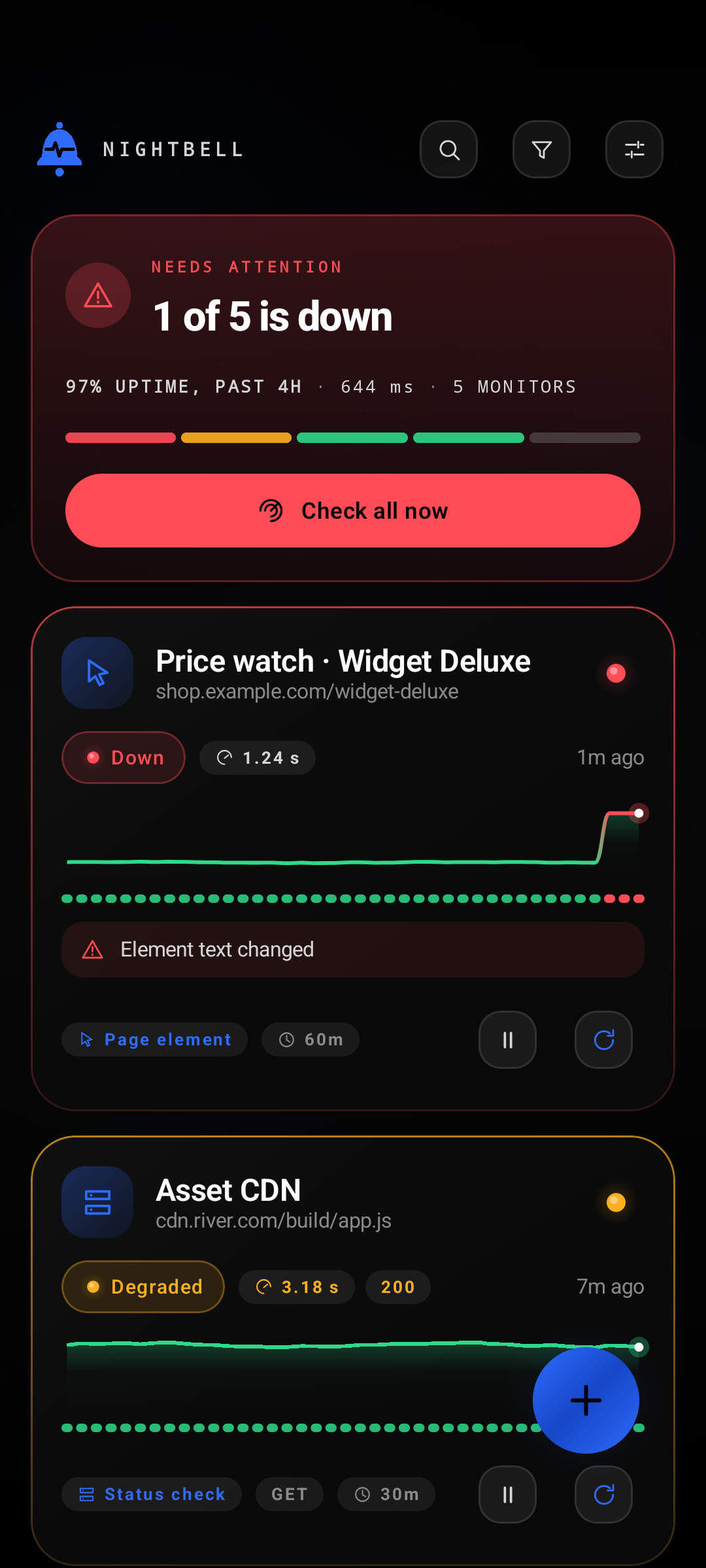
Point Nightbell at a URL, one element on a rendered web page, a Prometheus
server, your service's own health report, a GitHub repository, a host by
ping, TCP or UDP port, or an IMAP mailbox, and it watches it, charts it,
and gets loud when it breaks.
There is no server and no account. The phone in your pocket does the
checking, and your API tokens and target URLs never leave the device.
Ten kinds of monitor:
- Status check: hit a URL, assert on the status code.
- Request and response: pick the method, set headers and a body, assert
on what comes back (contains, equals, regex, or a JSON field by path).
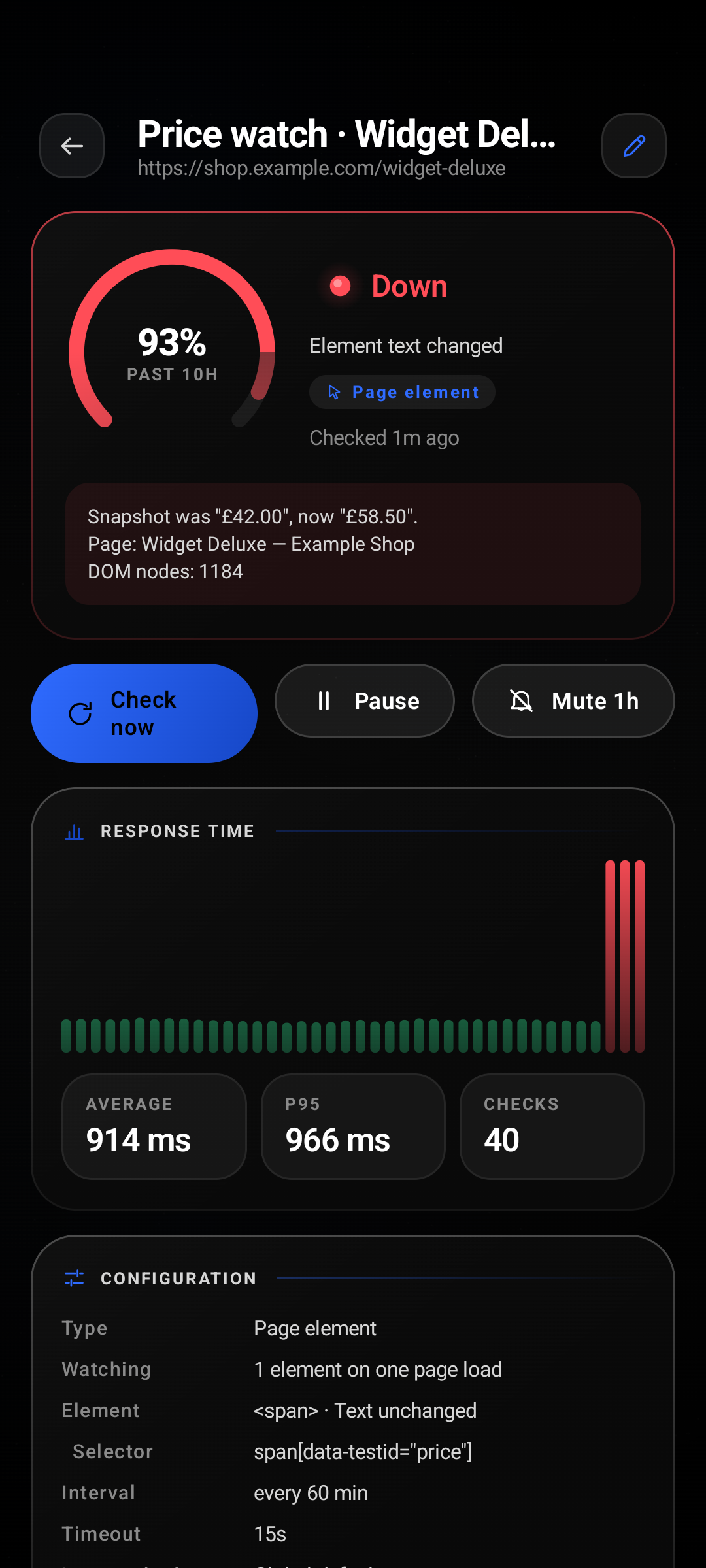
- Page element: load the real page in an embedded browser and watch DOM
nodes you picked by tapping them.
- Prometheus: read a metrics endpoint, run a PromQL query, or watch
Alertmanager.
- Health endpoint: read the report a service writes about itself, part by
part.
- GitHub repository: stars, issues, pull requests, comments, releases and
downloads.
- Ping: ICMP echo over IPv4 or IPv6, no root.
- TCP port: connect to one port and hang up.
- UDP port: send a real DNS, NTP, SNMP or game server query, or your own
bytes, and check the reply.
- Mailbox: new mail in an IMAP folder, louder for the senders that matter.
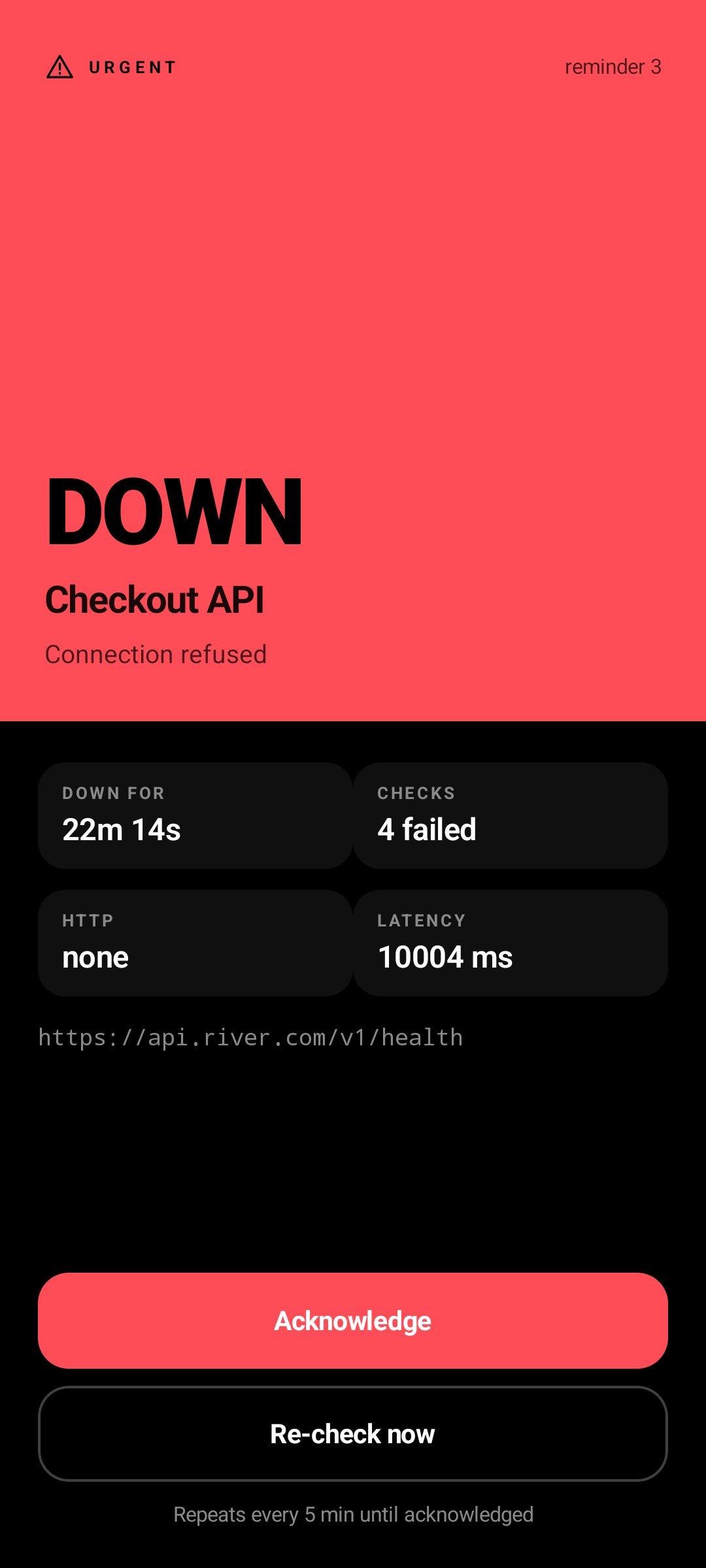
Urgent alerts arrive as a full-screen red page with a looping alarm that
keeps going until you acknowledge it, and it wakes the screen even if the
phone is locked. A first-launch screen walks through the four Android
grants a paging app actually needs (notifications, unrestricted battery,
full-screen intent, Do Not Disturb access), because two of them have no
system dialog and have to be opened by hand.
A home-screen widget shows the worst monitor first. Settings let you shape
the alert policy: what counts as down, sound, haptics, escalation, and
quiet hours.
Signed with the developer's own key. No Play Store listing.
server, your service's own health report, a GitHub repository, a host by
ping, TCP or UDP port, or an IMAP mailbox, and it watches it, charts it,
and gets loud when it breaks.
There is no server and no account. The phone in your pocket does the
checking, and your API tokens and target URLs never leave the device.
Ten kinds of monitor:
- Status check: hit a URL, assert on the status code.
- Request and response: pick the method, set headers and a body, assert
on what comes back (contains, equals, regex, or a JSON field by path).
- Page element: load the real page in an embedded browser and watch DOM
nodes you picked by tapping them.
- Prometheus: read a metrics endpoint, run a PromQL query, or watch
Alertmanager.
- Health endpoint: read the report a service writes about itself, part by
part.
- GitHub repository: stars, issues, pull requests, comments, releases and
downloads.
- Ping: ICMP echo over IPv4 or IPv6, no root.
- TCP port: connect to one port and hang up.
- UDP port: send a real DNS, NTP, SNMP or game server query, or your own
bytes, and check the reply.
- Mailbox: new mail in an IMAP folder, louder for the senders that matter.
Urgent alerts arrive as a full-screen red page with a looping alarm that
keeps going until you acknowledge it, and it wakes the screen even if the
phone is locked. A first-launch screen walks through the four Android
grants a paging app actually needs (notifications, unrestricted battery,
full-screen intent, Do Not Disturb access), because two of them have no
system dialog and have to be opened by hand.
A home-screen widget shows the worst monitor first. Settings let you shape
the alert policy: what counts as down, sound, haptics, escalation, and
quiet hours.
Signed with the developer's own key. No Play Store listing.